

 Muhammad Naeem
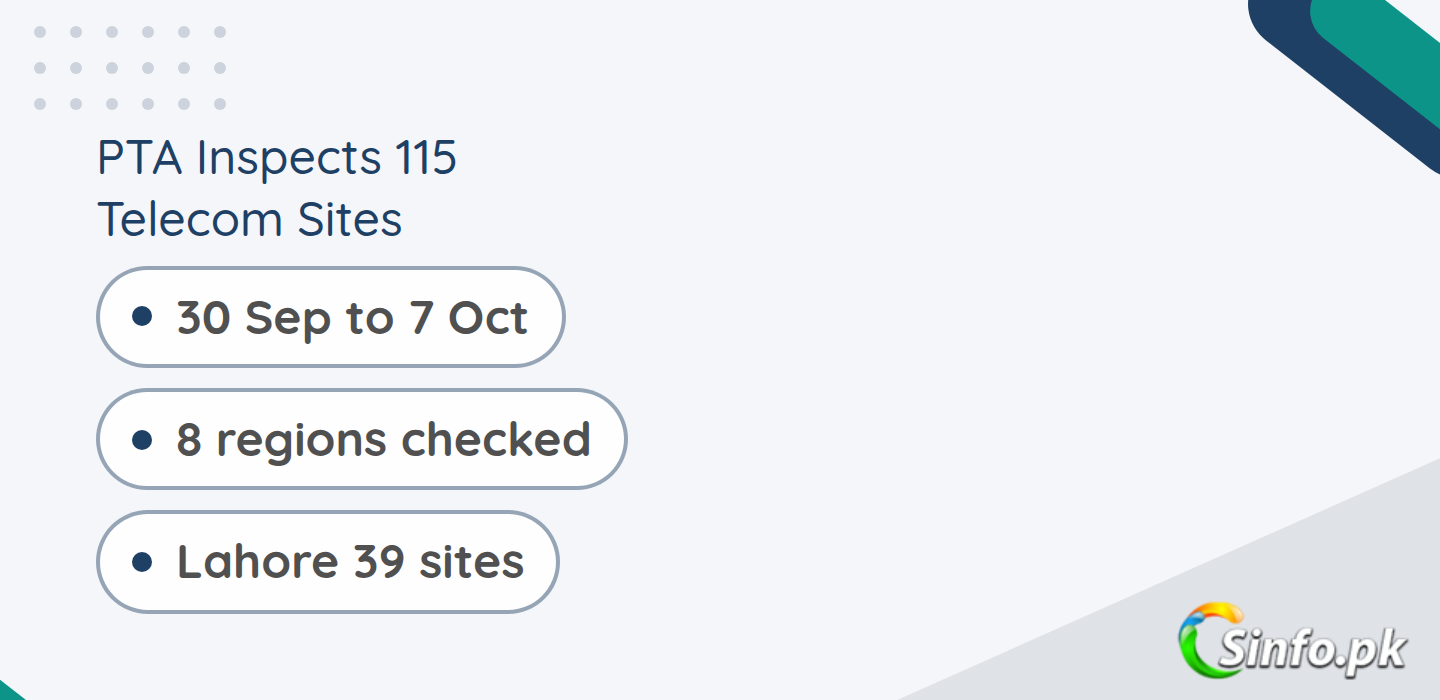
The Pakistan Telecommunication Authority (PTA) inspected 115 telecom sites across the country during the week of 30 September to 7 October. This post breaks down what the PTA 115 telecom sites inspection means for ordinary users: which cities were covered, what the field teams checked, what happens when a site fails its inspection, and what you can do if your own signal is poor.
Quick answer: PTA’s zonal office teams checked 115 mobile network sites in eight cities, led by Lahore with 39, Karachi with 17, and Sukkur with 16. They looked at voice quality, data speeds, coverage, and backup power arrangements, and saw service improvements in several of the areas covered. Where problems were found, the operators responsible were told to fix them. The details come from PTA’s latest field inspection report, published on 10 October.
City-Wise Breakdown of the PTA 115 Telecom Sites Inspection
The inspections were carried out by PTA’s zonal office teams, each covering its own region. Here is how the 115 sites were spread across the country:
| City | Sites Inspected |
| Lahore | 39 |
| Karachi | 17 |
| Sukkur | 16 |
| Multan | 14 |
| Rawalpindi | 14 |
| Quetta | 8 |
| Abbottabad | 4 |
| Gilgit | 3 |
| Total | 115 |
Lahore and Karachi getting the largest shares makes sense. These are the two biggest cities, with the densest network of towers and the heaviest mobile traffic, so they need the most checking.
What the PTA 115 Telecom Sites Teams Actually Checked
A “site inspection” sounds technical, but what the teams check is directly linked to the problems users complain about every day. According to the report, the teams in the PTA 115 telecom sites drive assessed network performance, voice and data service quality, coverage, and whether backup power arrangements were in place.
The monitoring focused on the exact issues consumers report: failed call connections, dropped calls, slow mobile internet speeds, and coverage gaps. The teams also reviewed consumer feedback and complaints to understand what people in each area were struggling with. On top of that, PTA says it is talking to local administrations, elected representatives, and community members to find and fix problems with mobile service in different areas.
Backup power is an important part of the checks. In many parts of Pakistan, a tower that loses power during load shedding can go offline if it has no working generator or battery backup. An inspection that finds missing or broken backup arrangements can explain why users in an area lose signal during power cuts.
What Happens When a Telecom Site Fails an Inspection?
When the field teams find a problem at a site or tower, the mobile operator that runs it is directed to take corrective measures. In plain terms, the operator is told what is wrong and asked to fix it.
This is how PTA’s field monitoring works. It does not fine a tower on the spot. Instead, the inspections feed into PTA’s ongoing oversight of how operators perform, and repeated problems can build into enforcement action. PTA says it remains committed to monitoring operator performance and making sure consumer concerns are identified and resolved on time.
PTA’s role does not stop at site inspections. It also sets the standard rates operators can charge for prepaid services and runs competition rules that keep the mobile market fair, so the inspections sit inside a wider system of consumer protection.
What This Means for You
If you live in one of the eight cities that were checked, the inspections are good news in a practical sense. The teams in this PTA 115 telecom sites drive physically visited the towers near you, tested whether calls connect and stay connected, measured data speeds, and checked coverage. PTA reports that improvements in mobile service quality have been observed in several of the areas covered, which suggests the earlier rounds of monitoring are having some effect.
But 115 sites is only a small slice of the towers across Pakistan. The drive covered eight cities and towns, so many areas were not inspected this time. If you are facing poor signal, the inspection does not mean your specific area was checked. The real value of the exercise is the signal it sends to operators: PTA is watching the ground, not just reading complaint statistics.
One honest limitation is worth noting. The report does not name which operators had problems, which areas showed improvement, or how many of the 115 sites failed their checks. So users cannot look up whether their own neighbourhood’s towers passed or failed. That level of detail would help a lot, but PTA has not published it.
What to Do If Your Signal Is Poor
The inspections are driven by consumer complaints, so your feedback genuinely feeds into what PTA checks next. If you face dropped calls, failed call connections, or slow mobile internet, here is a simple order of steps:
First, report the problem to your operator. Call their helpline or use their app and share your location and the exact issue. Operators can often fix a tower problem quickly when they know about it.
If the operator does not resolve it within a reasonable time, lodge a complaint with PTA through its official complaint channels. PTA’s website has a complaints section where you can file and track your case. Mention the issue type, your area, and how long it has been happening. This is the same feedback loop that shaped the recent PTA 115 telecom sites inspection round, where teams reviewed consumer complaints before heading out.
Keep your complaint reference number. If the issue stays unresolved, you can follow up and escalate it, and that trail of evidence makes it harder for either the operator or the regulator to ignore.
Honest Verdict: What to Watch Next
The PTA 115 telecom sites inspection is a positive step, and it is backed by fieldwork rather than just paperwork. Checking 115 sites in a single week, across eight regions, shows that the zonal offices are active. The reported improvements in several areas are encouraging, even if the details are thin.
What will matter now is whether the corrective measures actually get done. PTA directed operators to fix the problems found, but the report does not say by when or how compliance will be checked. Watch for two things in the coming weeks: whether PTA publishes follow-up results from these 115 sites, and whether the next inspection round covers new areas. Sustained field monitoring, repeated in the same areas, is what turns a one-week drive into lasting improvement.
For users, the takeaway is simple. Keep reporting poor service. Your complaints are one of the inputs that decide where the next inspection teams go.
FAQs
When did PTA inspect the 115 telecom sites?
During the week of 30 September to 7 October. The report was published on 10 October.
Which cities were covered?
Lahore (39 sites), Karachi (17), Sukkur (16), Multan (14), Rawalpindi (14), Quetta (8), Abbottabad (4), and Gilgit (3).
What exactly did the teams check?
Voice and data service quality, coverage, network performance, and backup power arrangements. They focused on failed call connections, dropped calls, slow mobile internet, and coverage gaps.
What happens if a site fails the inspection?
The mobile operator running that site is directed to take corrective measures, meaning it is told to fix the identified problems.
Does this inspection mean my area’s signal will improve?
Only 115 sites in eight cities were covered, so your area may not have been checked. The main benefit is that operators know PTA is monitoring on the ground. If your signal is poor, file a complaint with your operator first, then with PTA.
Source: ProPakistani, 10 October.



Add comment