

 Muhammad Naeem
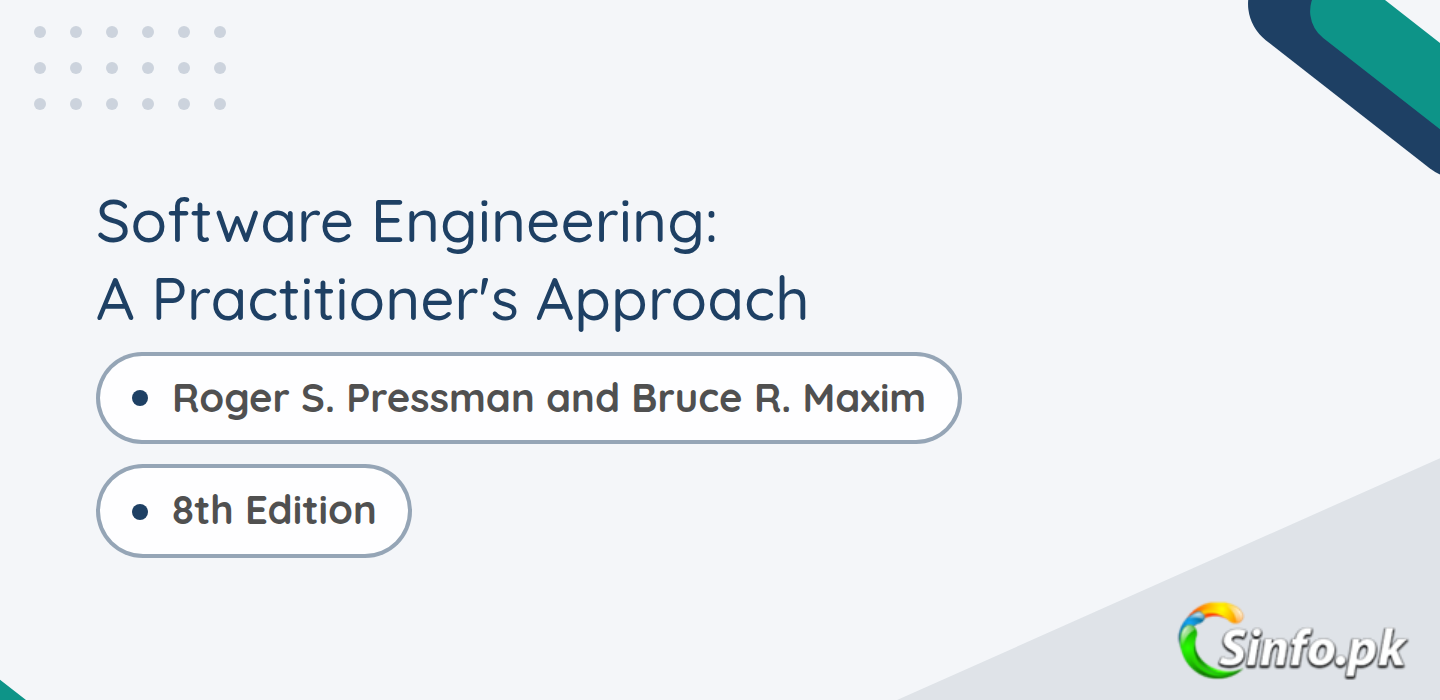
Software Engineering: A Practitioner’s Approach is the book PUCIT recommends for the Software Design and Architecture course. It is written by Roger S. Pressman and Bruce R. Maxim, and the edition used at PUCIT is the 8th edition, published by McGraw-Hill in 2015. Do not mix this book up with Ian Sommerville’s Software Engineering. Both books share the words software engineering in the title, but they are different books by different authors. If you searched for the Software Engineering: A Practitioner’s Approach pdf download, this page does not host a PDF file, but it explains how to get the book through legal sources.
This book focuses on the practice of building software: how a team designs a system, breaks it into parts, builds each part well, and tests the whole. It is written for students who already know the basics of software engineering and are ready to learn design and architecture in depth.
About the authors and the edition
The book is written by Roger S. Pressman and Bruce R. Maxim. The PUCIT course outline names the 8th edition. The book is known for its practical style: each method is explained with steps a team can follow, and the examples show how design choices affect the final software. The chapters on design and testing are the heart of the book.
The book assumes the reader knows basic programming and basic software engineering ideas, such as requirements and process models. It suits a later semester student better than a beginner, because it builds on ideas the reader has already met.
What Software Engineering: A Practitioner’s Approach covers
The book starts with design concepts, the ideas that guide good design: breaking a system into parts, keeping each part focused, and keeping the links between parts simple. Then it covers architectural design, where the team picks the overall shape of the system, such as layered, client server or pipe and filter styles.
Later chapters cover component design, which is how each part is built, and user interface design, which is how the software looks and feels to the people who use it. The book also covers testing in depth: how to plan tests, test single parts, test the whole system, and find faults before users do.
The last part of the book covers quality and maintenance: how to measure whether software is good, how to review work, and how to keep software running well after release. By the end, the reader can design a system, defend the design choices, and test the result properly.
The book also covers design patterns, which are proven answers to problems that come up again and again. A pattern is not ready made code to copy. It is a description of a good answer, with its strengths and its costs, so the reader can apply it to a new problem with judgment. Learning patterns gives a designer a shared language with other designers, which makes design talks faster and clearer.
Which PUCIT semester uses this book
At PUCIT, this book is used in the 7th semester of BS Software Engineering, for the Software Design and Architecture course. You can see it in the 7th semester list on the BS Software Engineering books page.
A note for newer batches: PUCIT and the University of the Punjab have revised their scheme of studies in recent sessions, so the order of some courses may differ for newer batches. You can check the official scheme on the University of the Punjab site.
Who should read this book
This book is for 7th semester BSSE students taking Software Design and Architecture, and for any student who wants to learn software design properly. It also helps readers working on final year projects, where a good design and solid testing make the difference between a project that works and one that falls apart in the demo.
Before starting, you should know programming, data structures and basic software engineering. Read the design chapters slowly and sketch the diagrams by hand. If you are building a project, use the book’s design methods on it. A design you draw yourself teaches more than a design you only read about.
A good way to study design is to look at software you already use and ask why it is shaped the way it is. Which parts are separate, and why? Where would a change be easy, and where would it break things? Asking those questions about real software trains the same judgment the book teaches.
Software Engineering: A Practitioner’s Approach PDF Download
Many students search for the Software Engineering: A Practitioner’s Approach pdf download. This page does not host a PDF file of the book, and there is no download button here. To get the book through legal sources, use the request form below and we will email you the details.
Request this book
This page does not give a file download. Fill in the form below and we will email you the details to get this book through legal sources.


Add comment